
Some products deserve a little more attention
Not every item in a store needs to be treated as a feature piece. Most products are there to be browsed, compared and picked up without much ceremony.
But there are usually a few things that have a story behind them. A limited-edition item, an old piece of equipment, an award, a signed product or something connected to the history of the business can give customers a reason to stop and look.
These items can do more than decorate the store. They give customers something to talk about.
Use the story, not just the object
A common mistake is putting an interesting item on display without explaining why it matters. Customers can’t always tell the difference between something valuable and something that was simply left there.
A small amount of information can change that. A short description, date, name or explanation of the item’s significance gives the display some context without turning the store into a museum.
This works particularly well for businesses with a history. A photograph of the original shop, an old product, a company award or a piece connected to an important event can make the business feel more established and personal.
Not everything needs to be on the sales floor
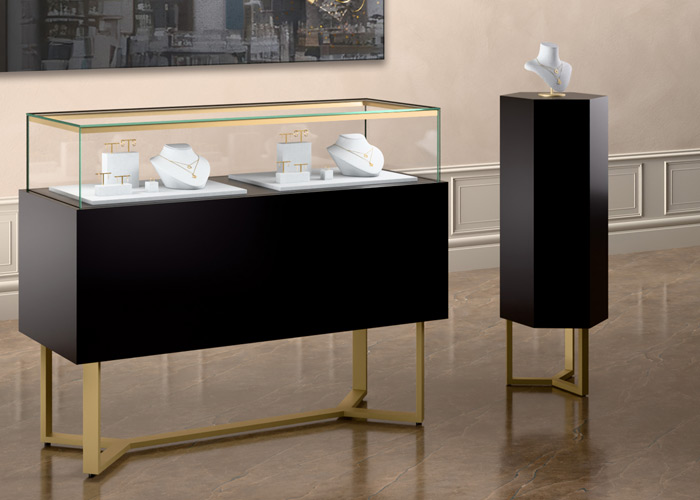
There is also a practical reason to separate special items from ordinary merchandise. Valuable or fragile pieces can be difficult to protect when they’re sitting on an open shelf surrounded by products that customers regularly handle.
A dedicated enclosure gives the item its own space while reducing the chance of accidental damage. For awards and memorabilia, a trophy case display can also turn something that would otherwise sit unnoticed in an office into a visible part of the store.
The important point is placement. If nobody walks past it, the display isn’t doing much.
Think about where customers naturally slow down
Displays work best in areas where people already have a reason to pause. Near an entrance, alongside a seating area, close to the checkout or at the end of a main aisle can all work depending on the store.
Putting a feature display in the middle of a busy walkway, on the other hand, can create more problems than it solves. Customers need room to move, and staff shouldn’t have to work around it all day.
A good location gives the display visibility without turning it into an obstacle.
Keep feature displays changing
A special display can also become invisible if customers see exactly the same thing every time they visit. That doesn’t mean everything needs to be replaced constantly.
Rotating a few items throughout the year can be enough. Seasonal products, new awards, recent achievements or pieces from the company’s history can each have their turn.
It also gives regular customers something new to notice.
Let the store show some personality
Retail spaces don’t have to be completely focused on selling. Customers remember places that give them something interesting to discover.
A well-presented piece of memorabilia or a meaningful object can make the shop feel less generic and give people a glimpse into the business behind the products.
The best feature displays aren’t necessarily the biggest ones. They are the ones that make customers stop for a few seconds and think, “What’s the story behind that?”